
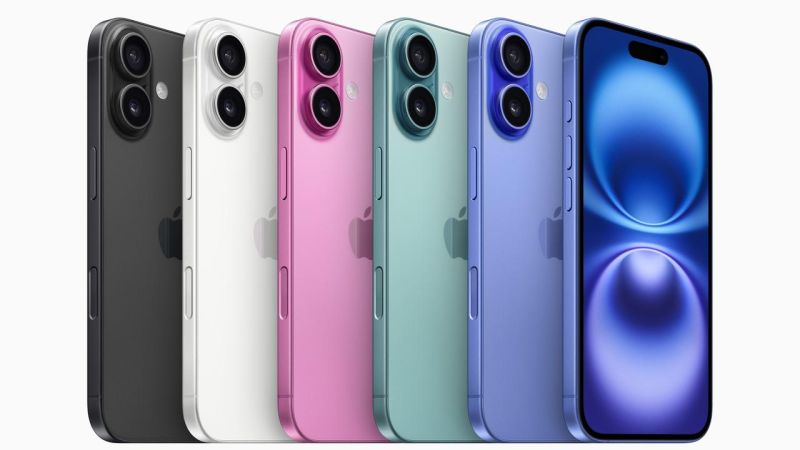
The iPhone 16e is positioned as Apple’s “economical” model in the iPhone 16 lineup. On paper, it promises core Apple experiences at a lower barrier of entry, preserving modern performance, updated hardware, and access to Apple Intelligence—while trimming features to justify its price gap from the standard iPhone 16. In practice, however, the device feels more like a hybrid experiment: a modern iPhone built from older foundations, with a price that still lands firmly in premium territory.
Pricing across nearby markets places the iPhone 16e at roughly 70–80% of the standard iPhone 16 price. Based on current seen pricing, the iPhone 16 series base model ranges near $950–$1,200 USD, while the iPhone 16e positions itself around $750–$850 USD depending on storage and region adjustments. The result is a noticeable yet not dramatic saving, raising a key question: does the compromise justify the discount?
Design and Build
Physically, the iPhone 16e carries a distinctly “older iPhone” aesthetic. It retains a notch display instead of Dynamic Island, thicker bezels, and a single rear camera layout reminiscent of the iPhone XR and iPhone 13 era. The matte finish on the back does elevate its premium feel, and the overall construction remains undeniably Apple-grade with excellent build quality.
Apple’s cost strategy is clear: reuse proven design elements, modernize key internal components, and frame it as a value flagship. From a practicality perspective, this works. From a modernity standpoint, the 16e visually feels like a device designed a few generations ago.
Display
The display is OLED, sharp, bright, and color-accurate. It’s clean, vibrant, and perfectly usable for media, browsing, and photography. However, the panel runs at 60Hz, which is a huge contrast to today’s widespread 120Hz ecosystem. Even older midrange Android devices now offer smoother visuals.
For general smartphone users, 60Hz remains serviceable. For gamers and heavy visual users, it feels outdated.
Performance and Thermals
Under the hood, the iPhone 16e runs Apple’s A18 chip—the latest generation, but with a slightly reduced GPU configuration compared to the standard iPhone 16. CPU performance remains essentially identical, meaning everyday use, multitasking, and productivity are flagship-level smooth.
Gaming performance initially impresses. Mobile Legends and Genshin Impact run fluidly at high graphics settings. However, sustained performance reveals this device’s weakness: heat management. Extended gameplay leads to noticeable thermal buildup, pushing temperatures toward 46–47°C, forcing frame drops. Power is not the issue; heat dissipation is.
The takeaway: fast processor, constrained cooling.
Battery
Battery life is one of the strongest reasons to consider the iPhone 16e. Apple claims the best endurance for any compact iPhone of this size, and independent testing broadly supports it. The 16e can last hours longer than many similarly sized models.
It supports wireless charging—but notably lacks MagSafe’s magnetic locking system. Charging still works, but lacks the convenience and ecosystem snap-fit experience Apple now markets.
Audio
Apple’s audio tuning continues to lead the industry. Even on a “budget” flagship, the speakers are loud, full, rich, and detailed. Music, games, and video playback sound excellent. This remains one of Apple’s most underrated strengths, and the 16e benefits heavily from it.
Software and Apple Intelligence
The iPhone 16e supports Apple Intelligence, Apple’s AI platform rollout, giving it future relevance that older iPhones lack. Features continue improving and expanding over time, meaning this phone grows more capable over its lifespan.
This places the 16e above devices like the iPhone 15, which are not guaranteed the same AI capability rollout.
Camera
The iPhone 16e relies on a single 48MP main camera. That sounds limiting—but image quality is extremely close to the iPhone 16’s primary camera. Photos are sharp, natural, well-balanced, and consistent with Apple’s proven photographic tuning.
Where it loses is flexibility. The standard iPhone 16 includes an ultrawide camera, macro capability, and stronger low-light video stability. Video quality on the 16e is good, but shows slight micro-jitter in tougher lighting.
So it is very capable—but limited, and Apple clearly wants that limitation to exist.
Who Is It For?
The iPhone 16e does not feel like a budget phone. It feels like Apple’s “strategic” device. A decoy product that exists to make other iPhones look more compelling. With a relatively small price gap, users comparing the lineup will often conclude that stretching a bit more for the iPhone 16 delivers significantly more value: better display, modern design, extra camera, better thermals, MagSafe, Dynamic Island, and stronger video system.
Meanwhile, older iPhones like the iPhone 13 and iPhone 15 sit even lower in price while still competing closely in experience. That makes the iPhone 16e sit in an awkward position: capable, but overshadowed.
Conclusion
The iPhone 16e is fast, battery efficient, AI-ready, well-built, and carries Apple’s signature ecosystem strength. Its main camera is excellent, its speakers are outstanding, and its endurance is genuinely impressive.
However, it sacrifices too much design modernization, display experience, camera versatility, and cooling performance for a price that still sits firmly in premium territory. For a little more money, the regular iPhone 16 is simply a better product in almost every meaningful category. For less money, the iPhone 13 and 15 remain compelling.
The iPhone 16e is good—but it rarely feels like the best choice.
Value Score: ⭐⭐⭐⭐⭐⭐⭐✩✩✩ (7/10 — solid device, but overshadowed by better-priced alternatives in Apple’s own lineup)